
Together, we can build a people-centered, democratic society!
Help us protect human rights and freedoms in the digital age through a monthly donation.
Donate now Read our latest content EDRi visions for digital futures Subscribe to our newsletterHow we're building an inclusive digital future
-

EDRi-gram, 17 April 2024
But what knocked everyone's socks off was the massive victory in Greece, where EDRi member Homo Digitalis' strategic complaint led to a record-breaking fine to the Ministry of Asylum and...
-
EDRi visions for digital futures
The future is ours to build. In 2024 and beyond, join us in shaping our digital spaces for people, democracy and the planet.
-
Open letter: Mass surveillance and undermining encryption still on table in EU Council
Today, 17 April, EDRi, in a coalition with 50 civil society organisations and 26 individual experts, call on Member State representatives not to agree to the proposed EU...
We work hard to make change happen
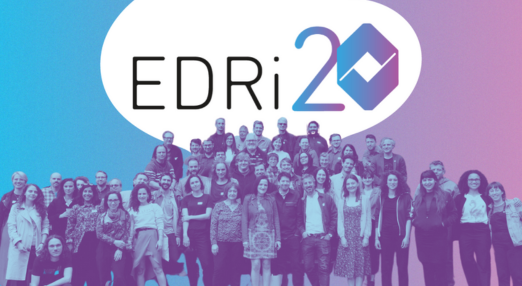
The European Digital Rights network turns 20 This year, EDRi turns 20, marking two decades of building a movement of NGOs, experts, advocates, technologists, academics and impacted communities. Together, we have been defending and advancing digital rights across Europe.
Two decades of digital rights impact
Protecting children whilst upholding confidentiality and security online European lawmakers proposed new rules to protect children. However, this law allows authorities to have anyone's legitimate conversations monitored. In doing so, it harms everyone, including those it wants to protect.
Stop Scanning Me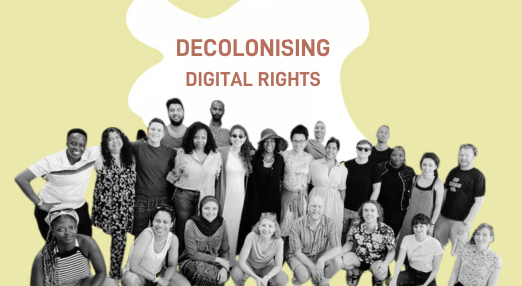
Decolonising digital rights Our goal is to challenge the structural causes of oppression to move towards a digital rights field in which all groups in society have their voices heard. By a decolonising process, we mean a process that acknowledges that oppression have their roots in a history of domination, exploitation, colonisation and are maintained by structural forces.
Letting ourselves be changedEDRi in the news

A Military Database of Fingerprints and Iris Scans One of the key points that we’re always trying to raise about biometric data and why it’s so sensitive is because it can identify you forever. IIt’s a marker of democratic societies that we still treat people, including criminals, with dignity, and with respect for their human rights.
READ THE ARTICLE
EU privacy watchdog sues lawmakers over new Europol mandate Van der Linde's case shows how Europol and national authorities poorly handle data exchanges among themselves and neglect key data protection rules. With the recently approved reform of Europol's mandate granting the agency more data processing powers, things can only get worse.
READ THE ARTICLE
The EU's home affairs chief wants to read your private messages Having anyone's legitimate conversations monitored will harm everyone, especially children. Experts show that no one will be protected by making the internet less secure. Mass surveillance online does not make us safer, it erodes our democratic rights and freedoms.
READ THE ARTICLEOther media talking about us
